
Health news
Fiji declares HIV a national crisis, 1 in 60 adults carry it
Fiji has officially declared HIV a national health crisis following a staggering surge in infections that has seen the virus spread far beyond traditionally high risk groups. Government data reveals that roughly one in every 60 adults in the Pacific island nation is now living with HIV, a dramatic increase from one in 167 just five years ago. In 2025 alone, officials recorded over two thousand new diagnoses, representing a sixteen fold increase compared to figures from 2019.
The crisis has hit particularly hard among vulnerable populations, with reports indicating that two percent of pregnant women are living with the virus and dozens of infants were born with HIV this year. While some of the spike may be attributed to improved testing and better detection after a decade of lagging surveillance, the trend remains alarming. Experts suggest that the rise is partly linked to Fiji becoming a regional hub for narcotics trafficking between Asia and Latin America toward Australia and New Zealand, which has fueled an increase in local injecting drug use.
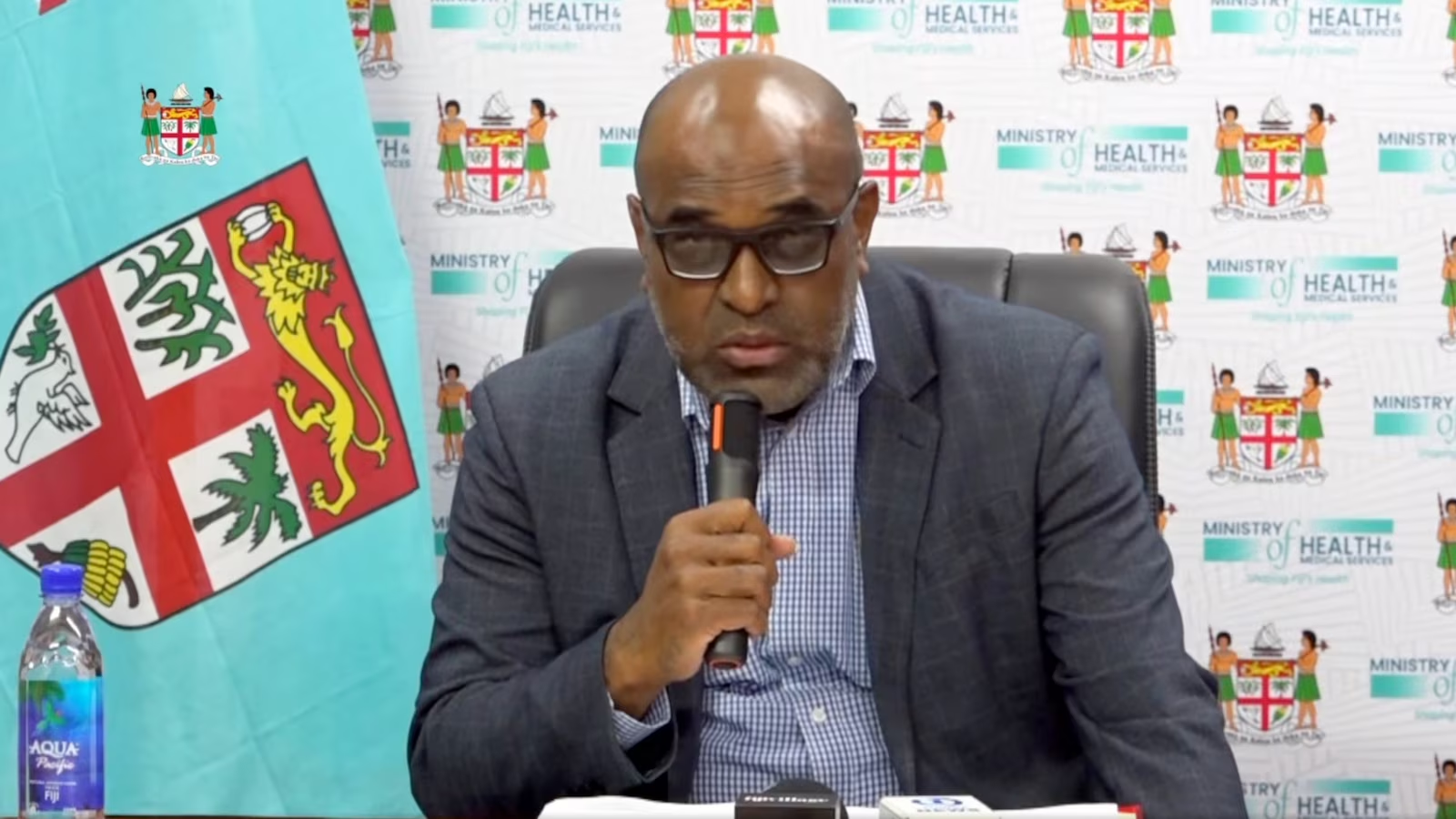
In response, Health Minister Ratu Atonio Lalabalavu and several cabinet members have formed a dedicated subcommittee to dismantle barriers to care and fast track emergency actions. The government is rolling out an aggressive whole of government strategy that includes free and confidential rapid testing, preventative medicine for those at high risk, and comprehensive treatment plans for those already diagnosed. These efforts aim not only to save lives but to combat the deep seated social stigma surrounding the disease.
International bodies including UNAIDS have welcomed the declaration as a necessary wake up call, though they warn that many residents remain unaware of their status. Current estimates suggest fewer than half of those living with HIV in Fiji know they are infected, and even fewer have access to life saving antiretroviral therapy. Despite these challenges, global health leaders emphasize that today’s medical advancements make it possible to turn the tide if testing becomes universal and treatment accessible for all citizens regardless of their background.
Related Stories

Eat this much whole grain per day to improve your health, study suggests
Updating your diet might be simpler than you think, provided you make room for a few more scoops…
Researchers swap in human brain cells for a mouse’s cortex
Researchers at Stanford University have achieved a provocative milestone in neuroscience by replacing a significant portion of a…
Teen’s brain-eating amoeba infection likely linked to water feature
State health officials believe a decorative water feature at a community center in Durham County is the likely…
Fiji declares national HIV emergency as case numbers surge
The Fijian government has officially declared a national HIV emergency following a dramatic surge in reported cases across…